
You Bought Every Part. So Where’s the Engine?
Let me guess. Somewhere in your books is a website you paid real money for. A CRM you mostly use as an address book. An SEO retainer you quietly cancelled, an automation platform someone talked you into, and lately an AI subscription or three. Every one of those purchases was defensible on the day you made it. And your business still is not compounding.
This is the first post in a ten-part series about the Authority Engine – what it is, why you do not have one yet, and how the one you need gets built. I am going to teach the concepts openly, one per week, because you are an adult and there is no upside to hiding the thinking behind a pitch. Today we start with the diagnosis, and the diagnosis is one sentence.
You own parts. You do not own an engine.
The Difference Between Parts and an Engine
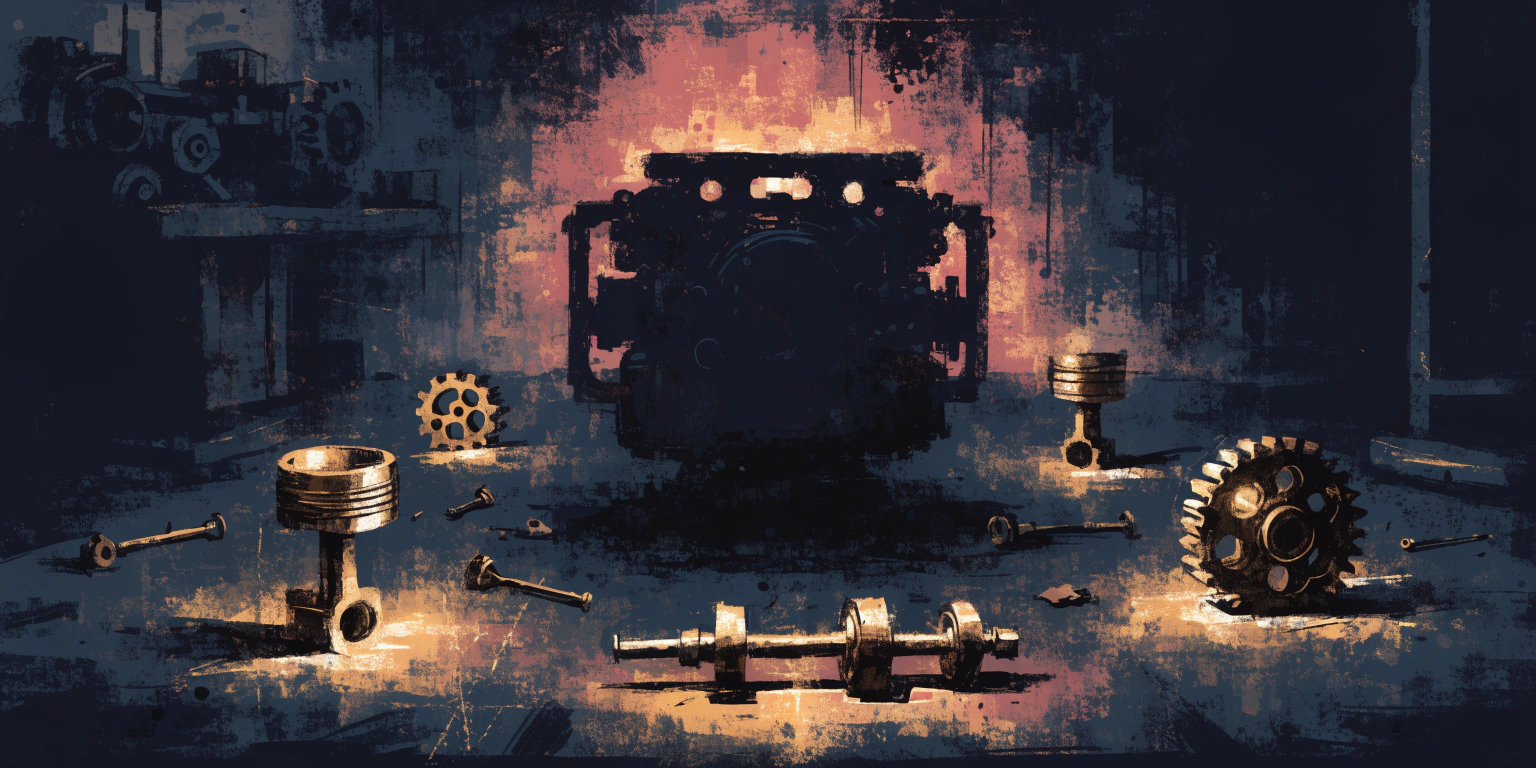
Picture a garage floor covered in engine components. Pistons, crankshaft, block, injectors, all of it high quality, all of it paid for. Nobody would look at that floor and say you own an engine. You own the makings of one. An engine only exists when the parts are assembled to a specification, in the right order, so combustion in one chamber turns motion in another.
Your marketing is that garage floor. The website is a part. The CRM is a part. The content, the ads, the email platform, the AI tools – parts, every one. They were sold to you separately, by separate vendors, each one solving the slice of the problem that vendor happens to sell. And you can buy every part of an engine and still not have an engine.
Why Every Purchase Felt Right and the Total Still Feels Wrong
Here is the uncomfortable part, and I say it with respect, because I spent years on the other side of this transaction. Nobody scammed you. The website company built a real website. The CRM does what CRMs do. The problem is not the quality of the parts. The problem is that no part can supply the thing that connects parts.
I know how this works from the inside. I have built websites for twenty-five years, hundreds of them, many behind the scenes for other agencies. For a lot of those years I was an aspirin salesman with a questionnaire. I asked good questions, then rushed past the answers to build the thing I already knew how to sell. The client got a good part. Whether they got a working system was left to chance.
So when I describe the garage floor, I am not describing a mistake you made. I am describing the default outcome of how this industry sells. Parts are photographable. Parts fit on a proposal. Parts have a price and a delivery date. The connective work does not fit in any of those boxes, so it quietly falls out of every deal.
The Part Nobody Sold You
The missing component has a name, and the name is clarity. Not clarity as a feeling – clarity as a working specification. A written, tested answer to questions like: how does this business actually make its money, who is it for, what has to be true before a stranger trusts it, and what should each part of the system do to move that forward.
Without that spec, every vendor builds to their own guess. The website guesses at the message. The ads guess at the audience. The CRM guesses at the pipeline stages. Ten competent guesses do not add up to one engine. They add up to the thing you have now, where the months are decent and you cannot fully explain why, and every new idea means starting the guessing over.
Later in this series I will spend a full post on why clarity is the part nobody sells, because the reason matters. The short version: it cannot be photographed, so it does not survive on a menu of deliverables.
How to Tell Which One You Own
You do not need me for this part. Ask yourself three questions, with your actual numbers in front of you and nobody watching.
Can you trace the path?
Pick your best customer from the last year. Can you name, step by step, how they found you, what convinced them, and which of your parts did that work? If the honest answer is a shrug and the word referral, the parts are not connected.
Does effort compound?
An engine turns fuel into motion at a rate you can predict. If you doubled your marketing effort next quarter, do you know what would happen? A pile of parts gives you no answer. It just gets more expensive.
Could you explain it to a buyer?
If someone offered to buy your business next month, could you hand them a document showing how attention becomes revenue? A business that lives in the owner’s head is a business running on the owner’s back. That is labor, not machinery.
If you sailed through those three, you may already have an engine, and this series will mostly confirm what you built. No shame in closing the tab. This series is for the owner who read those questions and felt the floor tilt a little – the one doing seven hundred thousand a year who works harder than anyone in the building and cannot say where the next hundred customers come from. I wrote about the questions themselves years ago in the three questions that drive predictable growth, and they have not changed.
What This Series Will Teach
Over the next nine weeks I am going to walk through the whole machine. What an Authority Engine is and why the authority in question is the kind you have already earned. Why clarity is the spec, build is the assembly, and growth is the combustion, and why that order is not optional. Why moving faster makes an unclear business worse. What AI actually changed, what it cannot supply, and what your marketing should leave behind if you ever stop paying for it.
None of it is theory. It is the pattern under twenty years of watching the same execution problems rhyme across a hundred-plus businesses – mineral rights, a beauty college, manufacturers, consultants, even a minor-league ballclub. Different industries, same garage floor.
One thing before next week. Do not buy anything. Not from me, not from anyone. The most useful thing you can do right now costs nothing: make the list. Every marketing part you currently pay for, one column for what it costs, one for what it is supposed to do, one for whether you can prove it does it. Keep the list where you can see it. We are going to use it.
Next in the series: What if you don’t need to build authority? – the verb everyone gets wrong, and why the expertise you already own is the raw material the whole engine runs on.