
What Does Build Actually Assemble?
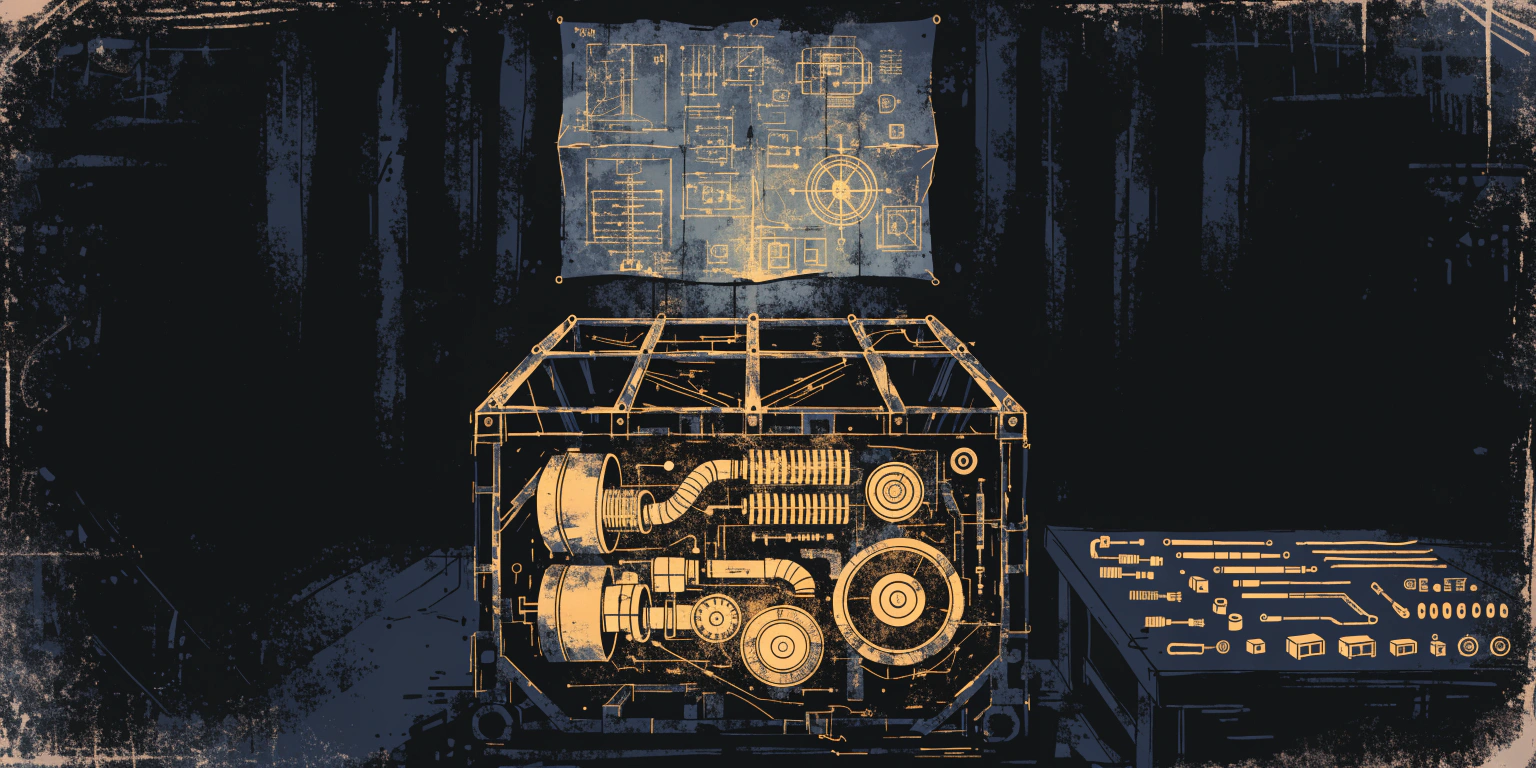
There is a moment in every engine build where the garage floor stops being a pile and starts being a machine. It is not the moment the most expensive part arrives. It is the moment assembly begins – parts meeting spec, in sequence, each one placed because the drawing says it goes there and does this.
This is the fourth post in a ten-part series on the Authority Engine. We have covered the parts diagnosis, the authority you already own, and clarity as the spec. This week is Build – the second phase of the engine, and the one most owners think they already did. You bought a website, after all. Here is why that is not the same thing.
Build Is a Phase, Not a Product
The first mental shift: in an Authority Engine, nothing in the Build phase is a product. The website is not a product. The CRM setup is not a product. The content library, the email system, the booking flow – components, all of them, and a component’s job is defined entirely by the spec it serves.
This sounds like semantics until you watch it change decisions. When the website is a product, the questions are product questions: how does it look, what does it cost, when does it launch. When the website is a component, the questions become engineering questions: what load does this carry, what does it receive from upstream, what must it hand off downstream, how do we measure whether it is doing that. Same artifact. Entirely different machine around it.
A website built as a product gets judged at launch and decays from that day forward. A website built as a component gets judged monthly against its load numbers, because the spec said what it was for.
What Actually Gets Assembled
Every business is different – that is what the spec is for – but the assembly generally covers four systems, and the order inside Build matters almost as much as the order of the phases themselves.
The foundation that says what is true
First, the presence that carries your message: usually a site, sometimes less. Built from the spec’s language – the words your buyers actually use, the questions they actually ask, the proof that actually persuades them. Not the eleven pages every competitor has. If the spec did its job, this foundation says who the business is for out loud, which most sites are terrified to do.
The paths that bring strangers
Search, referral, directories, wherever the spec says your buyers already look. Notice the direction of reasoning: not which channels are trendy, but where the buyer’s path said trust gets formed. For most established businesses the honest answer is fewer channels than the industry wants to sell you, worked properly.
The system that remembers
A CRM doing actual CRM work: capturing every inquiry, tracking every conversation, so no lead dies of neglect and every number in the spec stays measurable. Unglamorous. Load-bearing. This is also where most of the automation belongs – the follow-up that goes out on time because a machine sends it, not because you remembered at midnight.
The library that teaches
Your authority inventory from week two, converted into published answers. The questions you answer on repeat become pages, posts, and videos that answer them at scale. I wrote years ago about education as the foundation of authority, and Build is where that stops being philosophy and becomes a production schedule with your name on it.
What Assembly Looks Like When It Is Wrong
You have seen bad assembly, even if nobody named it for you. It looks like a beautiful new website with no follow-up system behind it, so inquiries arrive and rot. It looks like a content plan with no connection to the questions buyers ask, so the blog fills up and the phone stays quiet. It looks like automation bolted onto confusion, which does not fix the confusion, it just delivers it faster and at scale.
Each of those is a real part, competently made, installed without a spec. The vendor did their job. The machine still does not run, because nobody was responsible for the machine. That sentence, by the way, is the whole argument for treating Build as one phase under one specification instead of five purchases from five vendors. Somebody has to be responsible for the machine.
And here is the honest edge of this argument, stated the way I would want it stated to me: you do not have to hire anyone to get this. A spec plus a disciplined owner plus decent contractors can assemble a working engine. The spec is what makes your contractors good, because it tells them what to build. What you cannot do is skip the spec and hope assembly organizes itself. It has had years to organize itself. Look at the floor.
Why Build Comes Second and Not First
Every instinct in the market pushes Build to the front of the line. It is the visible phase, the photographable phase, the phase with a launch date you can celebrate. Almost everyone starts there, which is precisely why almost everyone owns parts.
Build comes second because assembly without a spec is a guess with an invoice attached, and because building is the most expensive place to discover your diagnosis was wrong. Changing a sentence in a spec costs nothing. Changing a launched website, a configured CRM, and a six-month content plan costs what it costs, and you have paid that bill before. The order is not a preference. It is arithmetic.
If you want the deeper pattern on connecting vision to the systems that carry it, I have written about strategic alignment before – the principle predates the Authority Engine and it will outlive whatever the industry renames itself next year.
The Question to Sit With
This week’s homework is one question, asked about the parts list you made in week one. For each part you are paying for: what is upstream of it, and what is downstream? What feeds it, and what does it feed?
A component in a working engine always has an answer to both. A part on the garage floor never does. Count how many of your parts have both answers. That number, more than any audit or dashboard, tells you how much of an engine you currently own.
Next in the series: when growth actually starts – what the Growth phase is, why it only works on top of a finished assembly, and what it means to say growth is engineered rather than wished for.